Why Visual Identity Is More Than a Logo: Building a Brand System That Scales
A logo is often the most visible symbol of a company, but it is only one part of how people recognize a brand. Customers encounter brands through websites, social media, video, presentations, packaging, advertising, vehicles and documents.
If each touchpoint looks and feels different, even a strong logo cannot create consistency on its own. A scalable visual identity system brings together design principles and assets that work across formats.
A logo identifies the brand. A visual identity gives the brand a language.
1. The Logo Is the Starting Point
A well-designed logo should be recognizable, practical and appropriate for the brand. It needs to work at different sizes and in different contexts, from a website header to printed material or a social media profile.
The logo cannot carry every communication task. A brand still needs a visual structure for situations where the logo is small, absent or secondary.
Successful identity systems create recognizable relationships between type, color, image, layout and tone. This is how effective branding becomes part of everyday communication.
2. Typography, Color and Composition Build Recognition
Typography is one of the most consistent elements in brand communication. Headlines, body text, captions, presentations and websites all rely on it. Choosing typefaces influences readability, personality and hierarchy.
Color works in a similar way. A clear primary and supporting palette helps create recognition even before a logo is noticed. Composition — the way elements are positioned, spaced and grouped — gives the identity another layer of consistency.
When these design principles are defined as a system, designers can create new material without having to reinvent the brand every time.
3. Photography and Imagery Are Part of the Brand
Photography has a major influence on how a company feels. Lighting, perspective, subject matter, cropping and color treatment can make the same brand appear technical, premium, approachable, energetic or restrained.
The same applies to illustration, iconography, motion graphics and AI-assisted imagery. Every image should belong to the same visual world as the rest of the brand.
A clear art direction makes it easier to select and produce images that reinforce identity. For example, a brand built around precise engineering may use controlled lighting, close detail and clean backgrounds consistently across its website, brochures and video.
4. Brand Guidelines Turn Design into a Working System
A visual identity becomes useful when other people can apply it consistently. This is the role of brand guidelines.
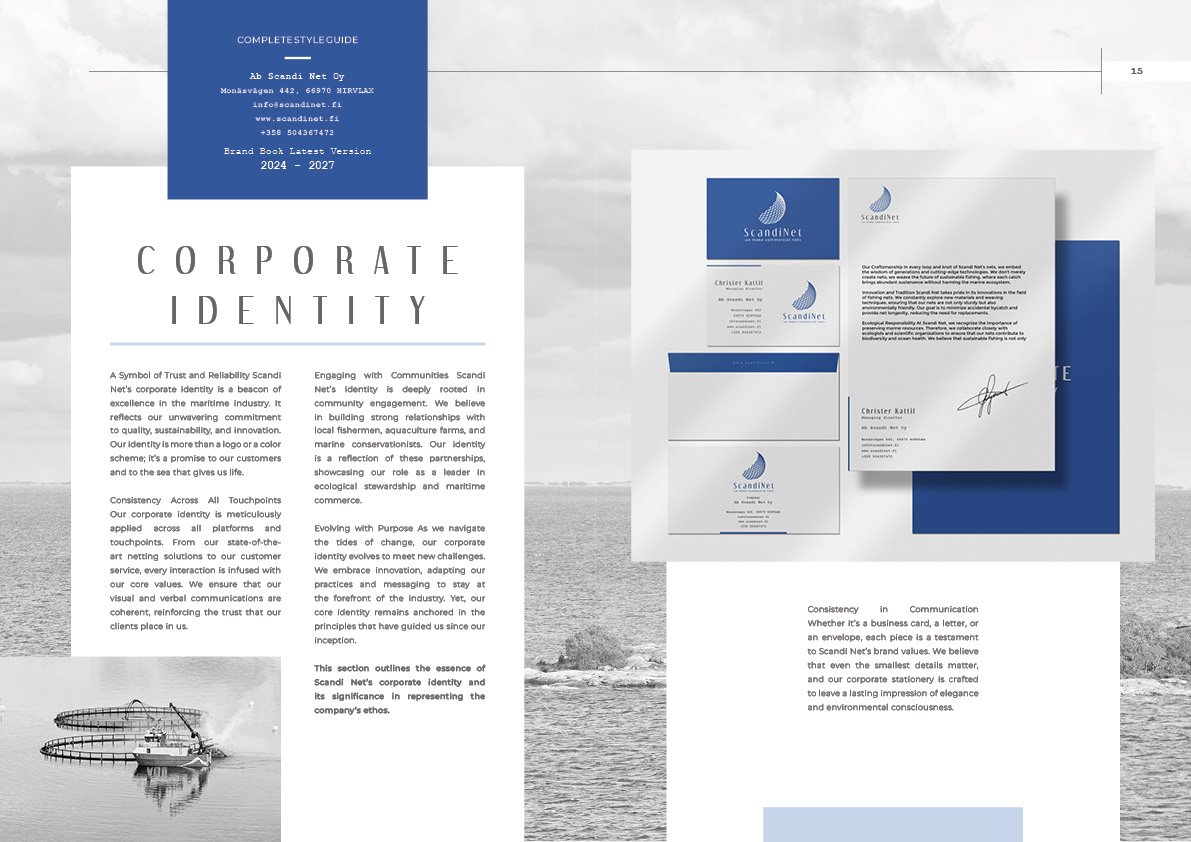
Good guidelines explain how the logo should be used, which colors and typefaces belong to the system, how layouts are structured, what kind of imagery is appropriate and how communication should adapt across formats.
The document should help employees, partners, designers and agencies make practical decisions. Include real examples, common mistakes and accessible assets. For a growing company, these details matter as more people begin producing content.
5. A Scalable Identity Works Across Touchpoints
A brand system should work on a phone screen, a large-format banner, a vehicle, a presentation, a video title card and a printed document without losing its character.
Different formats have different functional requirements. The goal is consistency of identity, with enough flexibility to adapt the composition to each application.
Testing the identity on realistic applications early reveals problems that a logo presentation alone can miss: small text, weak contrast, awkward crops or a layout that cannot accommodate another language.
Conclusion
The strength of a visual identity comes from the system around the logo. Typography, color, imagery, layout, motion and practical guidelines work together to create a recognizable brand experience.
Building this system early gives future websites, campaigns, video, social media and printed materials a clear creative foundation. It also helps reduce inconsistent decisions as the company grows.
At Sense Art, we develop brand identity as a working system that adapts to different formats, audiences and stages of business growth. Contact us to discuss a visual identity system for your company.

Leave a Reply